Your Home · Solar
The Panels Went Up. The Savings Never Came. Now Homeowners Are Pushing Back.
Across the country, people who signed solar deals at the kitchen table are finding hidden fees, climbing payments and installers who vanished. Here is what is going on, and what some of them are doing about it.
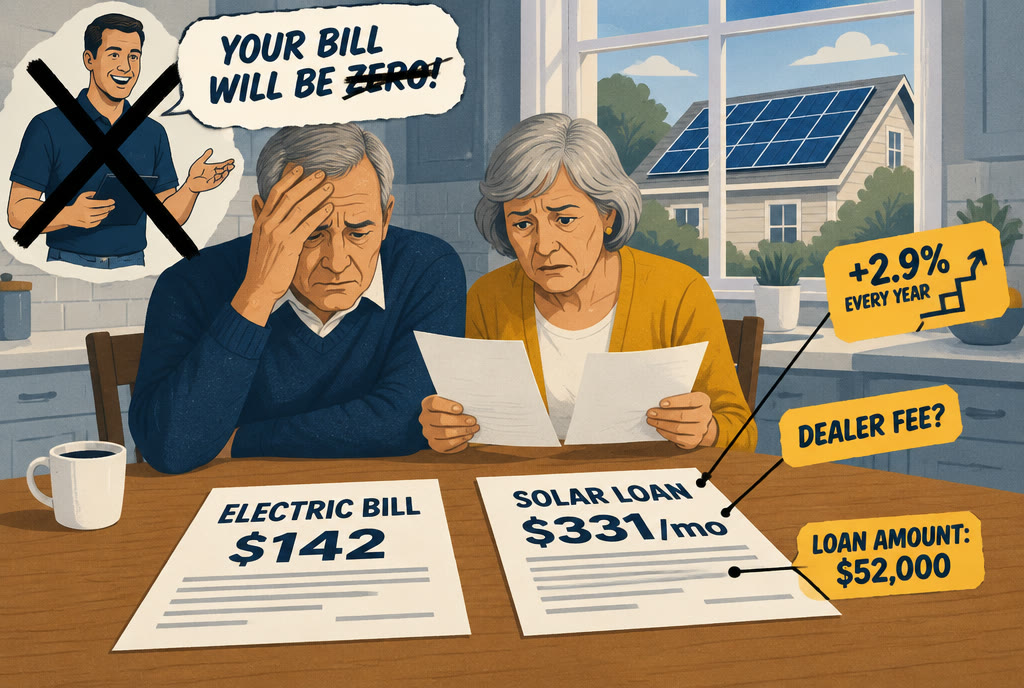
The pitch usually starts at the front door.
A friendly rep. A tablet. A promise that your power bill will drop to almost nothing.
Ten minutes later, you’ve signed a 25-year agreement on a screen you barely read.
For a lot of homeowners, that’s where the trouble begins.
It’s not just you
These aren’t rumors. They’re stories local news stations have been covering for years. Here are three of them.
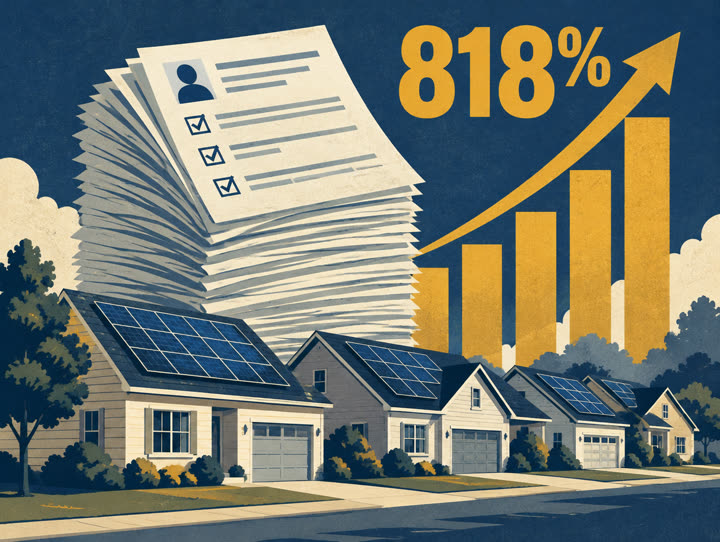
As reported by KPRC 2 Houston
Complaints to the Texas attorney general jumped 818 percent in five years.
From 2018 to 2023, solar complaints to the state’s top law enforcement office exploded. Read that again. Eight hundred and eighteen percent.
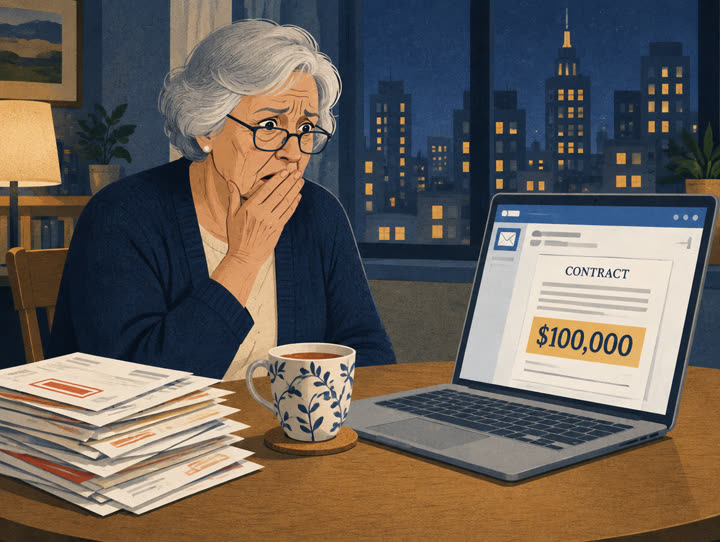
As reported by CBS New York
“$400 a month.” Upwards of $100,000. On a fixed income.
A Queens homeowner says her full contract showed up by email after the sale. She says it’s an amount she simply cannot afford.
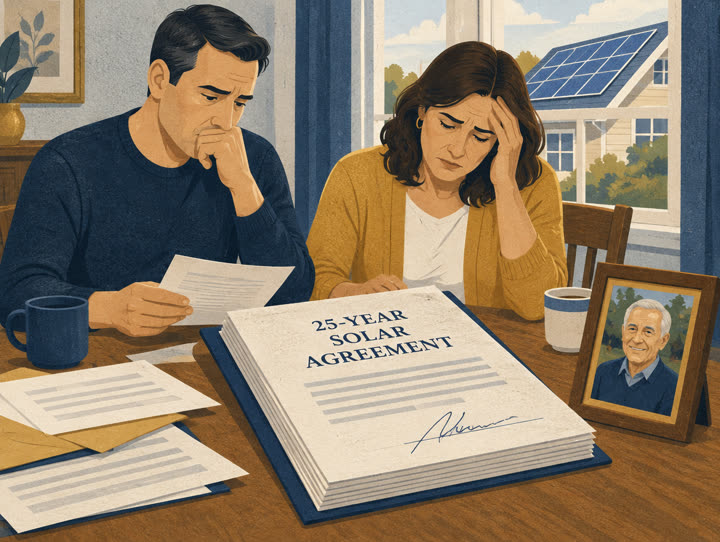
As reported by CBS News Texas
An 86-year-old signed to a 25-year contract.
His family says he could no longer sign his own name. When he was gone, the debt landed on them.
Illustrations. Details summarized from the news reports named above.
Even the regulators are calling it out
Minnesota’s attorney general sued four solar sales companies and their lenders, alleging they misrepresented what homeowners would save and tricked people into loan agreements, FOX 9 reported.
And a federal agency, the Consumer Financial Protection Bureau, found that hidden “dealer fees” can add 30 percent or more to the price of a solar loan. Often, they aren’t even labeled as a fee.
“Don’t feel bad or ashamed. Scammers are good at what they do.”
Keith Ellison, Minnesota attorney general, speaking to FOX 9
The 3 problems that keep showing up
When homeowners get their paperwork looked at, the same three things come up again and again. Most people have at least one.
The installer vanished.
The company that sold the system closed or stopped answering. Nobody is left to fix the panels or honor the warranty. But the loan payments keep coming.
The promises aren’t in the contract.
“Your bill will be close to zero.” “The tax credit pays half.” Lines like these often never made it into what you signed, sometimes in minutes, on a tablet, with the full contract emailed later.
The loan terms were never explained.
A dealer fee folded into the loan. A payment that climbs every year. A bill that jumps after the first year or so. The deal you’re paying isn’t the deal you were sold.
Grab your paperwork. Look for these.
- The loan amount is bigger than the cash price of the system.
- A line called “dealer fee,” “loan fee” or “platform fee.”
- A payment that goes up every year, or jumped after year one.
- An installer whose phone or website no longer works.
- Panels making far less power than the estimate you were shown.
So why do people keep paying?
Because they think a signed contract is final. Because they’re embarrassed. Because they’re scared asking questions will hurt their credit.
So they pay, and hope it gets better.
It almost never does.
But a contract sold on promises that aren’t in writing, with fees nobody explained, or from a company that no longer exists? That can be worth a closer look.
What homeowners are doing instead
Instead of paying and hoping, more homeowners are getting their contract reviewed.
That’s what Solar Cancellation Group does. (They’re the sponsor of this article.) It’s a homeowner advocacy company that goes through solar contracts looking for exactly these problems.
- A free call. You tell an advisor what happened. No loan details needed.
- A look at your paperwork. The contract, the loan and what you were promised get checked for the three problems above.
- A plan, in writing. If there’s something to act on, you see the plan and the cost before you agree to anything. If legal work is needed, they retain an independent law firm on your behalf.
Nobody can promise your contract gets cancelled, and they don’t. What you get is a straight answer.
Start with the 20-second check

Your questions
What homeowners ask us most
My installer went out of business. Am I still stuck paying?
Usually the loan is with a separate lender, so the payments keep coming even after the installer is gone. That does not automatically mean you are stuck. A review looks at who you actually owe, what you were promised, and whether the deal was sold the way it should have been.
My payment went up and nobody told me why. Is that normal?
Some solar loans rise every year, and some are built to jump if a tax credit is not paid toward the loan. If nobody explained that to you before you signed, that is exactly the kind of thing a review checks.
The rep said my bill would be close to zero. It isn’t. Does that matter?
It can. What you were told and what is actually in the contract are two different things, and the gap matters. Texts, emails, flyers or notes from the sale help. If you don’t have any, that is okay too.
I signed on a tablet in a few minutes. How do I even see my contract?
You should be able to get a copy from the installer or the lender. Many homeowners only got theirs by email after the sale. If you can’t find it, an advisor can help you figure out where to get it.
I’m embarrassed I signed. Does this happen to a lot of people?
All the time. Complaints in Texas alone went up 818 percent in five years. These sales pitches are built to work on smart, careful people. There is nothing to be embarrassed about.
Will this hurt my credit? Should I stop paying?
A review call does not touch your credit. But don’t stop paying on your own, because missed payments can hurt your credit. Make any decision with a clear plan in front of you.
Is the review really free?
The first call is free. If there is something worth acting on and you want help with it, you get the cost in writing before you agree to anything.
Can anyone guarantee my contract gets cancelled?
No, and you should be wary of anyone who does. Every contract is different. A review gives you a straight answer about whether there is something worth acting on.
Is Solar Cancellation Group a law firm?
No. It is a homeowner advocacy company and does not give legal advice. When legal work is called for, it retains an independent law firm on the homeowner’s behalf.
Sources
- KPRC 2 Houston, April 2025
- CBS New York, November 2024
- CBS News Texas, February 2024
- FOX 9 Minneapolis, April 2022
- Consumer Financial Protection Bureau, “Issue Spotlight: Solar Financing,” August 2024